snusvending

The binding constraint

Behind a counter a person checks. In a machine, the machine has to.

Every market with a minimum age applies it however the sale happens. That single sentence is the whole engineering problem of unattended nicotine retail, and it is the first thing a regulator asks about — before siting, before payment, before product.

It is also the reason a market can permit the product and still prohibit the machine.

Minimum age, where verified

The age is rarely the hard part. Proving it at an unattended machine is.

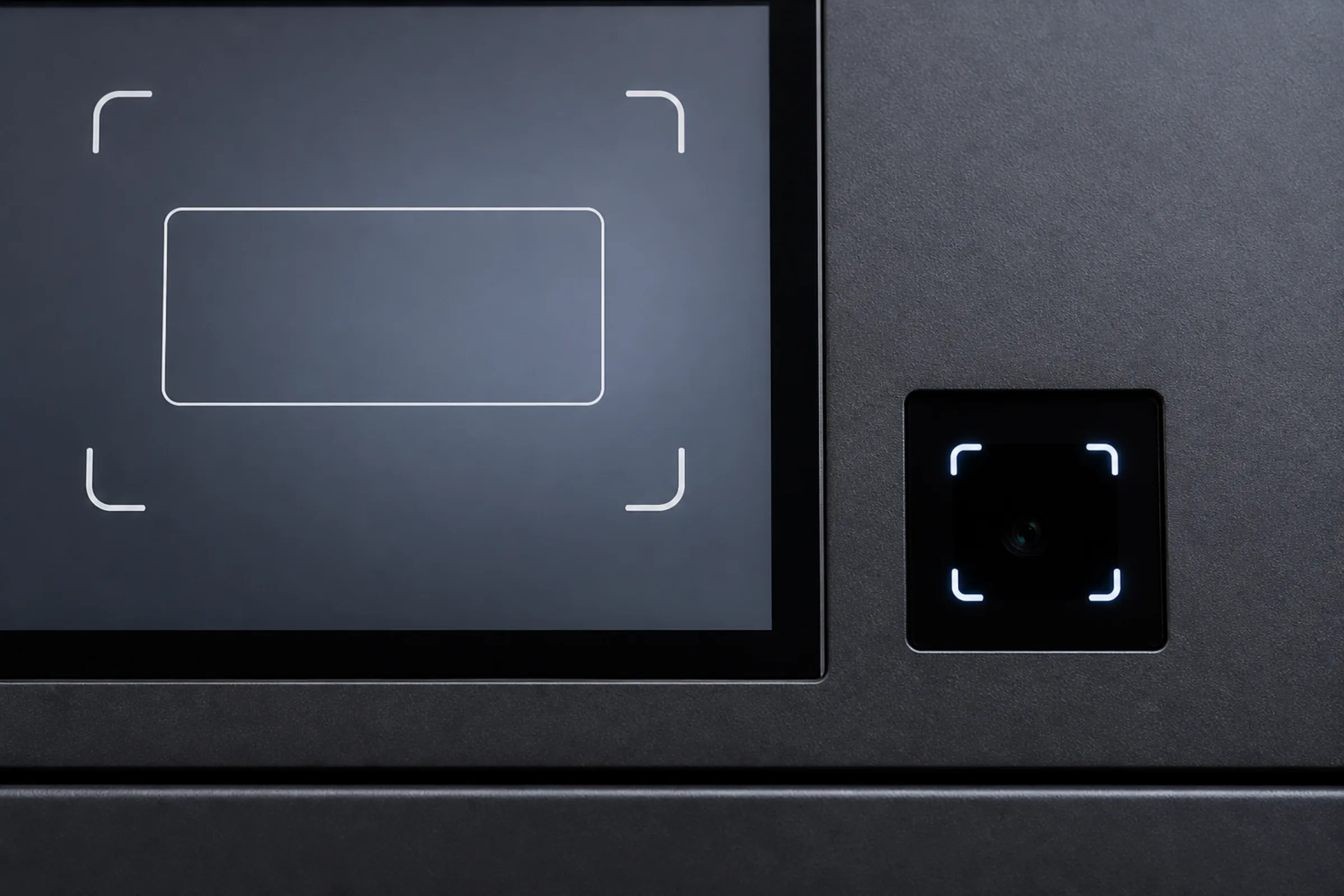
Close-up of a vending kiosk screen showing an outlined ID card inside a scan frame, with the small dark camera window of the document scanner set into the fascia beside it.
Behind a counter a person checks the age. In an unattended machine, this does.

Four ways to prove it

And they are not equally accepted.

Identity document scan

A camera in the fascia reads a government-issued document — the barcode on a driving licence, or the machine-readable zone of a passport — and the machine confirms the date of birth before it unlocks. The whole interaction takes seconds.

The most widely accepted method, because it verifies against a document a state issued rather than against a claim the buyer makes. Some systems add a face match to the document photo to stop one adult buying for a group.

In practice

  • Switzerland Mandatory for vending machine sales under the tobacco products ordinance, against an official identity document — physical or electronic.
  • Japan The default since Taspo was discontinued in March 2026: machines read a driving licence or My Number card directly.
  • Italy Automatic age-detection is a condition of installing a machine at all, and the same duty attaches to e-cigarette machines.

National electronic identity

The buyer authenticates with a state or bank-backed digital identity on their phone — BankID, a national e-ID, SwissID — and the machine receives a verified age assertion without ever handling the document.

The strongest option where the infrastructure exists, because the identity is verified continuously by the issuer rather than at the moment of the scan. Its weakness is coverage: it only works for residents enrolled in the scheme.

In practice

  • Switzerland Electronic identity is explicitly contemplated alongside physical documents — an e-ID or a secure electronic identity such as SwissID satisfies the requirement.
  • Sweden No prescribed method, but the 18-year limit applies however the sale happens, and BankID is the practical route in a market where almost everyone has it.

Issued card or token

Age is checked once, by a person, and the buyer is issued a card that unlocks machines afterwards. The machine verifies the card, not the person.

Falling out of favour. It moves the check away from the point of sale, which is what regulators increasingly object to, and the card can be lent. Japan ran the largest such scheme in the world and retired it.

In practice

  • Japan Taspo gated every tobacco machine nationwide from 2008 until it was discontinued in March 2026.
  • Norway The sole exception to an otherwise complete prohibition on self-service sale is a machine drawn from with a pre-paid card — which is a staffed model wearing a machine’s clothes.

Gating by venue

The machine performs no check. The premises do — nobody under the age limit is admitted at any time, so everyone in front of the machine is already of age.

Simple and legally robust where it is offered, but it decides your entire estate: it confines machines to bars, nightclubs, casinos and private clubs, and rules out hotels, gyms, offices and shops.

In practice

  • United States The federal rule is venue-based: a machine may only stand in a qualified adult-only facility where nobody under 21 may enter at any time.
  • Spain Machines are confined to venues where access by minors is controlled, and must additionally carry a mechanism preventing access by minors and sit under the owner’s direct supervision.

The part that is not technology

A machine can verify perfectly and still be unlawful.

These are the duties most often missed, because they attach to the operator rather than to the hardware.

  • Czechia

    Limited

    Notify the Ministry of Health of the age-verification system before operating.

    The age rule extends to vending machines and e-shops, and operators must give advance notice of how they will enforce it. Treat it as a prerequisite, not paperwork to follow later.

  • Denmark

    Limited

    Expect to be test-purchased.

    Sikkerhedsstyrelsen has used young test purchasers to check age control in physical shops since 1 July 2024. A machine that verifies on paper and fails in practice is the thing that finds out.

  • Italy

    Limited

    Installation authorisation, from the monopoly channel.

    Only a licensed retailer may install a machine, sited beside their own premises and authorised by the inspectorate. The age device is a condition of that, not a substitute for it.

Case study

Japan retired the largest scheme in the world.

From 2008, every tobacco vending machine in Japan was gated by Taspo — an RFID card issued after a one-off age check. It was the most complete deployment of age-verified vending anywhere, and it was discontinued in March 2026.

What replaced it is the direction of travel everywhere else: the check moved from a token issued once to a document read at the moment of sale. Facial recognition and passport-chip reading were both approved and neither spread widely.

Why it matters to an operator

A card issued once can be lent, and it moves the check away from the point of sale. That is precisely what regulators have been converging against — Switzerland now requires verification against an official document at the machine, and Norway permits its pre-paid card route only because the card is issued by a person over a counter.

If you are specifying hardware, specify for document reading. A token scheme is the model that has just been retired in the market that proved it at scale.