snusvending

Payments, telemetry & data

The compliance solution creates its own compliance problem.

A machine that verifies age is a machine that reads identity documents. Add a face match against the document photo and it is processing biometric data. That obligation arrives with the hardware, it belongs to whoever operates the machine, and it is routinely discussed as a product feature rather than as something someone has to answer for.

Which is why this page is about the data as much as the payment.

Again, no figures

No transaction fees, no hardware prices, no uptime percentages.

The data-protection points below are framed as questions to settle, not as claims about what a particular law requires — the principles are general, the obligations are market-specific, and those belong on a market page with a source attached.

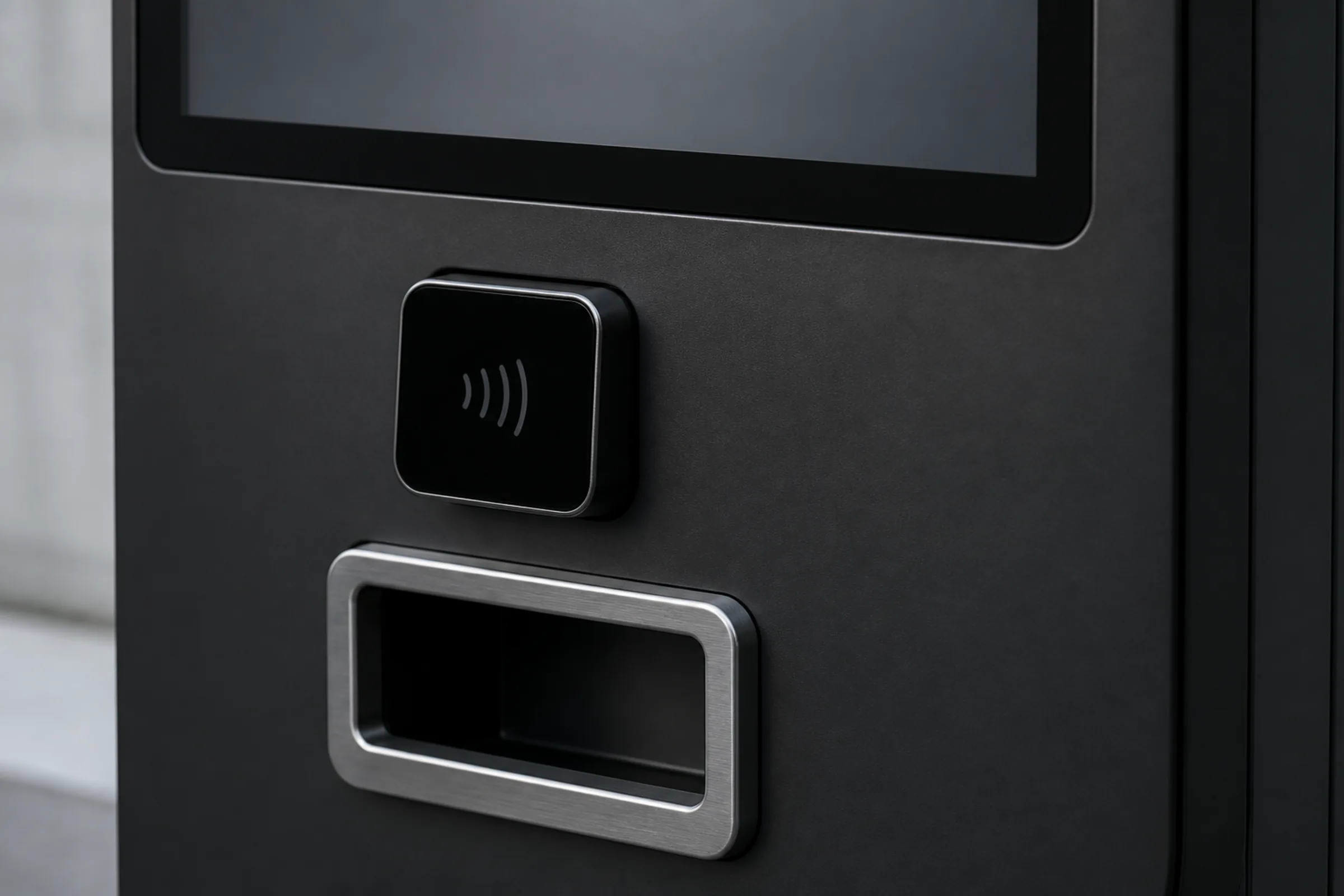
Close-up of a contactless card reader and the stainless dispensing bin on a matte black kiosk fascia, with the lower edge of the touchscreen above.

01

Payment and the age check are one interaction

In this category they cannot be designed separately.

A buyer verifies, selects and pays in a single approach to the machine, and the verification has to gate the dispense rather than sit beside it. That is why the modern units are screen-led kiosks rather than glass-fronted cabinets with a coin slot bolted on: the screen is the verification surface first and the merchandising surface second.

02

Cash is the awkward one

It breaks the link between the sale and the person.

Cash leaves no record tying a dispense to a verified buyer. In a category where the question a regulator asks is how you know you did not sell to a minor, a cash sale answers it only as well as the machine logged the verification separately. Cashless does not solve compliance by itself, but it keeps the two halves of the transaction attached to each other.

03

Telemetry is the compliance artefact, not just an ops tool

The value is the record, not the restocking alert.

Cloud vending management exists to tell an operator what sold and what needs filling. In an age-restricted category it does something more useful: it is the evidence that the machine was operating as specified on a given date. Where a market requires a notified verification system, as Czechia does, or sends test purchasers, as Denmark does, the log is what turns a claim into a demonstration.

04

Verifying age means processing identity data

And the operator owns that problem.

Reading a driving licence or passport to establish a date of birth is processing personal data about an identified person. Adding a face match against the document photo goes further, into biometric processing, which most data-protection regimes treat as a special category requiring its own lawful basis. This is a real obligation created by the compliance solution, and it is routinely treated as a hardware feature rather than as something anyone has to answer for.

05

The design question is how little you can keep

A verified yes or no is not the same as a stored document.

A machine can be built to read a document, derive whether the holder meets the age threshold, and retain only that answer — or it can be built to store the scan. Those are very different positions to be in when someone asks what you hold. Specify it before purchase, because it is a firmware and architecture decision rather than a setting you can change afterwards.

Before choosing hardware

Seven questions for a supplier.

Most of these are architecture decisions rather than settings, which means they are answered at purchase or not at all.

How the verification methods differ →
  1. 01Does the machine store the identity document, or only the age determination derived from it?
  2. 02If face matching is offered, is it on by default, and can it be turned off entirely?
  3. 03How long is verification data retained, where is it stored, and who else can reach it?
  4. 04Who is the controller of that data in the intended operating model — the operator, the venue, or the supplier running the cloud platform?
  5. 05Can the telemetry produce a per-machine record of verification events for a given date, in a form a regulator would accept?
  6. 06What happens to a sale if verification hardware fails — does the machine refuse to dispense, or fall back to dispensing?
  7. 07Where a market requires the verification system to be notified in advance, will the supplier provide the specification needed to make that notification?

The failure mode worth deciding in advance

If the verification hardware fails, does the machine refuse to dispense or fall back to dispensing? It is a one-line configuration and it decides whether an outage is a lost day of trade or an underage sale.

In markets where the offence attaches to whoever manages the premises, the host carries that decision whether or not they were consulted about it. Settle it in the agreement alongside everything else on the operating page.

Who carries the duty →
Close-up of a vending kiosk screen showing an outlined ID card inside a scan frame, with the small dark camera window of the document scanner set into the fascia beside it.
Behind a counter a person checks the age. In an unattended machine, this does.

This is a commercial reference, not legal advice. Rules change, and several of the markets covered here are actively changing. Always confirm the current position with the national authority named on the market page before placing equipment or importing stock.