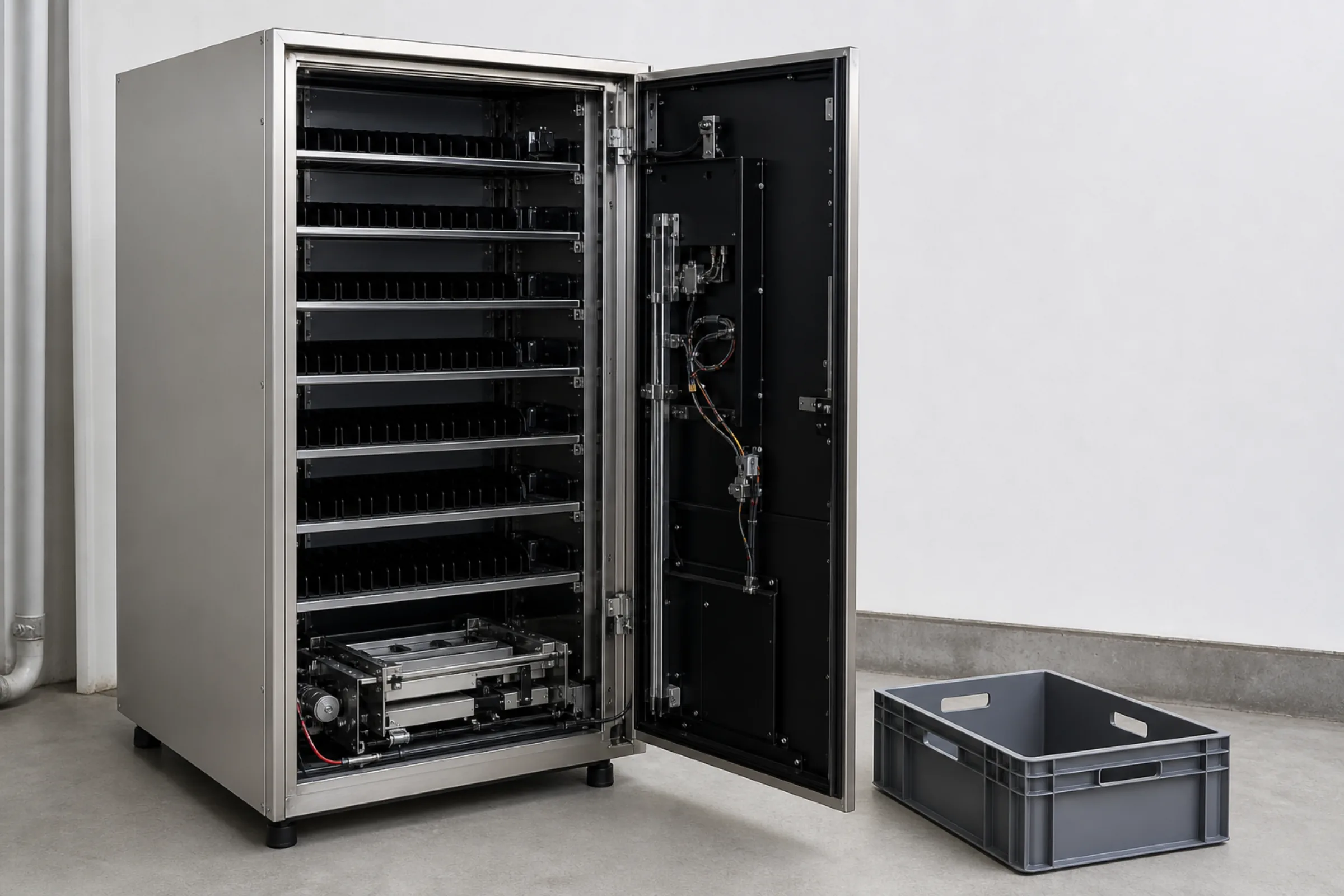
The model decides who is liable, not who owns the box.
Ordinary vending splits neatly: the operator owns the machine and the host provides the floor. This category does not split that way. In most markets on this map the duty attaches to the premises or to a licence — so a host who assumed the operator carried it has assumed wrong.
That is the most expensive thing to get wrong in a placement agreement, and it is settled in a sentence if anyone thinks to write it.
What this page does not contain
No margins, no revenue shares, no payback periods, no typical rents.
We do not measure any of it. Those numbers should come from the supplier quoting for your volumes, in writing — not from a third party’s rule of thumb, however confident it sounds.
Four models
Three are commercial choices. One is not.
Venue owns and runs it
The site buys or leases the machine outright and runs it themselves — their stock, their pricing, their revenue, their staff loading it.
The venue holds everything: capital, stock, compliance, and the relationship with the regulator. A supplier sells hardware and possibly a service contract, and then steps back.
Watch for
The venue is almost always the party the law already looks at, so this model aligns liability with control. It also means the venue needs to understand the duties before it signs, not after.
Operator places it in someone else’s venue
An operator owns the machine, installs it in a host venue, keeps it stocked and serviced, and pays the host for the space — the standard vending arrangement in most categories.
The operator holds the machine and the stock. The host holds the premises. That split is exactly where this category diverges from ordinary vending, because several markets attach the duty to the premises rather than to the equipment.
Watch for
Establish in writing which party is answerable for an underage sale before the machine is installed. In markets where the offence attaches to whoever manages the premises, a host who assumed the operator carried it has assumed wrong.
Full service from the supplier
The supplier provides the machine, the stock, the filling, the servicing and the telemetry as one package, and the site provides floor space and power.
Operationally the lightest option for a site, and the one that most often hides the compliance question, because the site does very little day to day and may assume it therefore carries very little.
Watch for
Ask specifically who is named on any notification, authorisation or permit the market requires, and who is answerable if age verification fails. Doing nothing day to day does not by itself transfer a duty that attaches to premises.
Licensed retailer operates it
Not a commercial choice but a legal requirement in monopoly-channel markets: the machine may only be operated by a licensed tobacco retailer, sited at or beside their own premises.
The licence holder is the operator, full stop. There is no host venue and no placement agreement, because a third-party venue was never permitted to have one.
Watch for
This is a market-entry question rather than a contract question. If you are not the licence holder, your customer is — which changes the entire pitch.
Where the duty lands
Follow the premises and the licence, not the equipment.
Each line is drawn from that market’s own page, where it is sourced to the statute or the authority it comes from.
From 29 October 2026 it is an offence for a person with management or control of premises to have a machine there dispensing nicotine products. The offence follows the premises, not the equipment.
The machine must sit in an authorised establishment under the direct and permanent supervision of its owner, and the venue holds the sales permit. Supervision is a duty the host cannot delegate to an operator.
Installation is by the monopoly administration or a licensed retailer, authorised by the inspectorate, and the age-detection duty attaches to that machine and that licence.
On the retailer, and on the venue’s adult-only status.
The machine is only lawful in a qualified adult-only facility, which is a fact about the premises that the retailer has to be able to demonstrate rather than a setting on the machine.
Settle these in writing
Six clauses, in the order arguments arise.
None of these are exotic. They are simply the points that get skipped because the machine is small and the agreement feels routine — and then decided expensively later.
01Which party is answerable for an underage sale, named explicitly rather than implied by who owns the machine.
02Who is named on every notification, authorisation or permit the market requires, and who renews them.
03What happens if the law changes during the term — several markets on this map have dated commencements and drafted bills, and a term that outlives the permission is a liability for someone.
04Who owns the machine at the end, who removes it, and who pays for removal if a market closes.
05Who holds the transaction and age-verification data, who may see it, and how long it is kept.
06What the machine may display, since a display prohibition can change the hardware requirement mid-term.
This is a commercial reference, not legal advice. Rules change, and several of the markets covered here are actively changing. Always confirm the current position with the national authority named on the market page before placing equipment or importing stock.